Short Cycling in Summer: Why Your AC Starts and Stops
AC short cycling means your system shuts off before it finishes a full cooling cycle, usually in under 10 minutes. On a hot Lansing afternoon, a healthy central air conditioner should run 15 to 20 minutes per cycle and complete two or three cycles per hour, according to U.S. Department of Energy guidance. If your unit is cutting off well before that, something is interrupting the cycle, and this article will help you figure out what.
What Is AC Short Cycling and What Does Normal Look Like?
Short cycling is not the same as your AC simply running less because the house is already cool. It means the compressor kicks on, runs a few minutes, shuts off, then kicks on again, without ever getting the house to the temperature you set. The thermostat is never satisfied. The system just keeps restarting.
Normal behavior on a hot Michigan day looks like this: the compressor runs for 15 to 20 minutes, the house reaches setpoint, the system shuts off, and then it waits several minutes before starting again. Two to three of those cycles per hour is about right during peak heat. If your system is completing a cycle every five or six minutes, that is short cycling.
A lot of homeowners get a little confused here, especially after a new system install or after moving into a house where they do not know the equipment well. If you are not sure whether what you are seeing is a problem or just normal behavior, the 10-minute rule is a good starting point: cycles consistently under 10 minutes signal something worth looking into.
Check These Things Before You Call Anyone
The good news is that the most common causes of short cycling are also the easiest to fix, and most of them cost nothing. A competent technician would ask about all of these before rolling a truck anyway, so checking them yourself just saves everyone time.
Start with your air filter. A clogged filter is the single most common, most overlooked cause of AC problems including short cycling. When airflow is restricted, the evaporator coil gets too cold and ices over. A frozen coil cannot absorb heat, so the system trips a safety and shuts down. The Department of Energy recommends replacing a standard 1-inch filter every one to three months. Pull it out and hold it up to the light. If you cannot see light through it, replace it today. For a step-by-step walkthrough on choosing the right filter and swapping it out safely, see our guide on how to change your HVAC air filter.
Check where your thermostat is located. A thermostat next to a sunny window, above a lamp, or near a heat vent will read the air around it as warmer than the rest of the house. That false reading tells the system the house has not cooled yet, so the AC keeps running. Then a brief draft or shift in the room cools the thermostat quickly, the system shuts off, and the cycle repeats. If your thermostat is in a bad spot, that alone can cause short cycling.
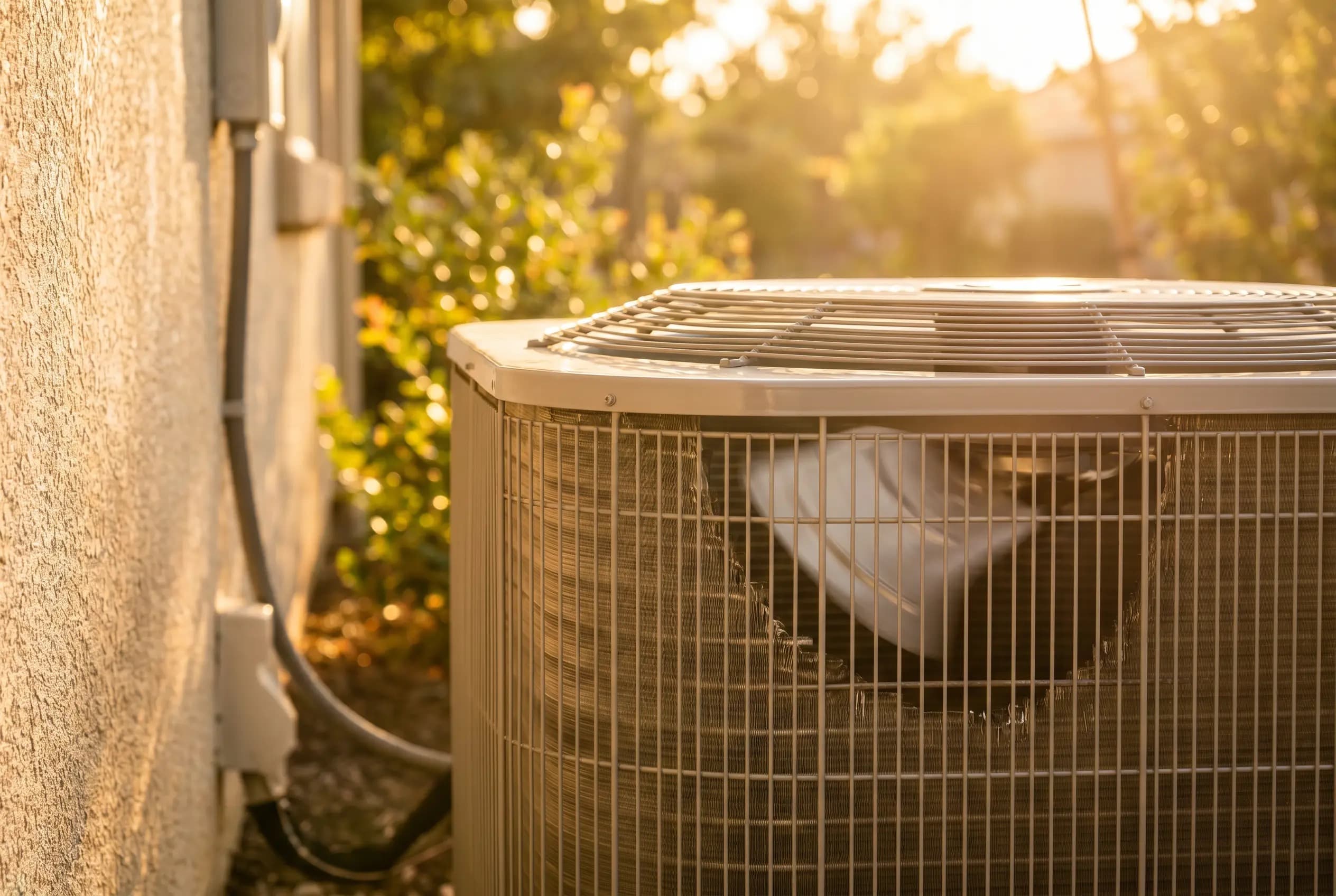
Go outside and look at your condenser unit. The outdoor unit needs clear airflow to shed heat. In Lansing, cottonwood season runs from late May through June, and that white fluff packs into condenser fins like insulation. Lawn clippings do the same thing after a mow. A dirty or blocked condenser traps heat, which causes the high-pressure safety switch to trip and shut the compressor off early. Clear debris from the sides and top of the unit, and if the fins look packed with material, a gentle rinse with a garden hose (from the inside out if possible, or call a tech to do it properly) can help.
These three checks take about 15 minutes total and solve a meaningful share of short-cycling complaints without a service call.
DIY Checklist: Triage Your AC Before Calling a Tech
Work through this list in order. If any item fails, fix it, let the system rest for 30 minutes, and see whether the short cycling resolves before moving on.
| Check | What to Look For | What to Do |
|---|---|---|
| Air filter | Visibly gray or clogged, no light passing through | Replace immediately with correct size and MERV rating |
| Thermostat location | Positioned near a window, lamp, vent, or exterior wall in direct sun | Relocate thermostat or shade the heat source; call an electrician if relocation is needed |
| Thermostat settings | Set to COOL, not FAN only; set at least a few degrees below current room temp | Correct settings and test |
| Outdoor unit clearance | Debris, cottonwood, or clippings packed around or on top of unit | Clear debris; rinse fins with gentle water if heavily clogged |
| Evaporator coil freeze | Ice visible on the refrigerant lines near the indoor unit | Turn system to FAN ONLY, let thaw for 30 minutes, then restart |
| Indoor supply and return vents | Furniture, rugs, or curtains blocking vents | Move obstructions; open all supply vents fully |
If you have worked through the whole list, made any corrections, and the system is still short cycling after a 30-minute rest, the cause is probably something a technician needs to evaluate.
Why Your House Feels Sticky Even When the Thermostat Says 72
This is one of the more frustrating parts of short cycling, and it comes up a lot in Michigan summers. The thermostat reads your target temperature, but the house feels damp and uncomfortable. You are not imagining it.
Your air conditioner removes humidity as a secondary function, but it only does that job during sustained runtime. When warm, humid air passes over the cold evaporator coil for long enough, moisture condenses out of the air and drains away. That process, called latent heat removal, takes time. A system that shuts off after five or six minutes never finishes the dehumidification pass.
Michigan summers make this worse than it might be elsewhere. Relative humidity across the Lower Peninsula regularly exceeds 70 percent on summer afternoons, according to NOAA climate data. That is a significant moisture load for your AC to deal with. When short cycling cuts the run time short, that moisture stays in your house. The thermostat says 72. Your body says something is wrong. Both are right.
This is why a house with an oversized AC, which we will get to in the next section, can feel clammier than a house with a properly sized system running longer cycles. Bigger is not always better.
Causes That Need a Technician: Refrigerant, Oversizing, and Electrical
If the DIY checklist came up clean, one of three professional-level causes is likely at work.
Low refrigerant from a leak. Your AC system is a sealed loop. Refrigerant does not get used up like fuel. If the level is low, there is a leak somewhere. A low refrigerant level causes pressure in the system to drop, which trips the low-pressure safety switch and shuts the compressor off early. The EPA estimates that leaks occur in a meaningful portion of residential AC systems over their lifetimes, and handling refrigerant is regulated under Section 608 of the Clean Air Act. That means adding refrigerant is not a DIY option, and it should not be. A technician will find the leak, repair it, and recharge the system to the correct level. Adding refrigerant without fixing the leak just delays the problem.
An oversized unit. An air conditioner that is too large for the space it serves cools the air so quickly that the thermostat is satisfied before the system has run long enough to pull humidity out. Then it shuts off, the humidity rebounds, and the cycle repeats. Oversizing is a sizing error that cannot be corrected by adjusting settings. The only real fix is replacing the unit with one that matches the actual load of the house, determined by a Manual J load calculation.
A failing capacitor or electrical issue. The capacitor is the component that gives the compressor motor the jolt it needs to start. When a capacitor weakens, the motor struggles to start or shuts down prematurely under load. This is one of the most common summer service calls Michigan HVAC contractors handle, and it is a relatively inexpensive repair. A loose wire or failing control board component can cause similar symptoms. A technician can diagnose these quickly with standard equipment.
All three of these are normal wear and service issues. None of them is a catastrophe. They just require the right tools and credentials to fix correctly.
If you have already decided you need a technician, you can schedule a service call with Kestler here. We will run through the diagnostics and tell you plainly what we find.
Where Homeowners Get Burned
Short cycling is rarely an emergency in the first hour, but there are a few mistakes that turn a manageable problem into a bigger one.
Running a frozen coil without letting it thaw. If your evaporator coil is iced over, running the system in cooling mode will not fix it. It will make the ice worse. Switch to fan only, wait 30 minutes, and let the coil return to normal before restarting. Skipping this step can damage the coil.
Adding refrigerant without fixing the leak. This is a temporary patch at best. If the leak is still there, the refrigerant you added will leak out again. You end up paying for the same service call twice, and the compressor runs under low-pressure stress in the meantime.
Ignoring short cycling and letting it run. Compressor startup is the most mechanically and electrically stressful moment in the entire operating cycle. A system that short cycles is restarting far more often than a healthy system. That accelerates wear on the compressor. A few days of short cycling is unlikely to cause permanent damage. Weeks of it is a different story.
Accepting a replacement unit without asking about a load calculation. If a contractor quotes you a replacement and cannot show you a Manual J load calculation to justify the size, ask for one. Installing another oversized unit solves nothing and restarts the same comfort problems. Any reputable contractor will do this calculation before recommending equipment.
These are all avoidable mistakes. None of them is the end of the world, but each one makes a manageable situation harder and more expensive to resolve.
FAQ: AC Short Cycling Questions We Hear a Lot
How long should my AC run before shutting off?
On a hot Michigan day, a properly sized central air conditioner should run roughly 15 to 20 minutes per cycle and complete two to three cycles per hour, according to U.S. Department of Energy guidance. If your system is consistently shutting off in under 10 minutes without reaching your set temperature, that is short cycling and worth investigating.
Can I keep running my AC while it is short cycling?
You can run it for a short time without causing immediate damage, but leaving it short cycling for days is not a good idea. Compressor startup draws the highest electrical current and causes the most mechanical stress in the entire operating cycle. A system that restarts constantly wears that component far faster than normal. If you suspect a frozen evaporator coil, switch to fan only right away. Running the compressor over a frozen coil makes the problem worse, not better.
Why does my house feel humid even though the thermostat reads my set temperature?
Your AC removes humidity as a secondary function, but only during sustained runtime. Short cycling cuts the dehumidification pass short, so moisture stays in the air even after the temperature setpoint is reached. In Michigan summers, when afternoon humidity across the Lower Peninsula regularly exceeds 70 percent according to NOAA climate data, that leftover moisture makes the house feel clammy and wrong even when the thermostat number looks right.
Is short cycling caused by a refrigerant leak something I can fix myself?
No, and this is one to take seriously. Refrigerant handling is regulated under EPA Section 608 of the Clean Air Act, which requires a certified technician. Beyond the legal side, adding refrigerant without finding and repairing the leak just means the refrigerant leaks out again. A technician will locate the leak, fix it, and recharge the system to the correct level. That is the only repair that actually solves the problem.
How do I know if my AC is oversized for my house?
The clearest sign is a house that reaches the setpoint temperature quickly, even on very hot days, but still feels humid and uncomfortable. Very short cycles that end in under 10 minutes on a 90-degree day are another indicator. The correct way to determine proper sizing is a Manual J load calculation, which accounts for your home's square footage, insulation, window area, orientation, and other factors. If a contractor is quoting you a replacement unit, ask to see the load calculation that justifies the size they are recommending.
---
If you have worked through the checklist above and the system is still short cycling, it is time for a diagnostic visit. Contact Kestler Heating and Cooling and we will take a look. No pressure, no upsell. Just a straight answer about what is going on with your system.
Common questions
Frequently asked
How long should my AC run before shutting off?
On a hot Michigan day, a properly sized central air conditioner should run roughly 15 to 20 minutes per cycle and complete two to three cycles per hour, according to U.S. Department of Energy guidance. If your system is consistently shutting off in under 10 minutes without reaching your set temperature, that is short cycling and worth investigating.
Can I keep running my AC while it is short cycling?
You can run it for a short time without causing immediate damage, but leaving it short cycling for days is not a good idea. Compressor startup draws the highest electrical current and causes the most mechanical stress in the entire operating cycle. A system that restarts constantly wears that component far faster than normal. If you suspect a frozen evaporator coil, switch to fan only right away. Running the compressor over a frozen coil makes the problem worse, not better.
Why does my house feel humid even though the thermostat reads my set temperature?
Your AC removes humidity as a secondary function, but only during sustained runtime. Short cycling cuts the dehumidification pass short, so moisture stays in the air even after the temperature setpoint is reached. In Michigan summers, when afternoon humidity across the Lower Peninsula regularly exceeds 70 percent according to NOAA climate data, that leftover moisture makes the house feel clammy and wrong even when the thermostat number looks right.
Is short cycling caused by a refrigerant leak something I can fix myself?
No, and this is one to take seriously. Refrigerant handling is regulated under EPA Section 608 of the Clean Air Act, which requires a certified technician. Beyond the legal side, adding refrigerant without finding and repairing the leak just means the refrigerant leaks out again. A technician will locate the leak, fix it, and recharge the system to the correct level. That is the only repair that actually solves the problem.
How do I know if my AC is oversized for my house?
The clearest sign is a house that reaches the setpoint temperature quickly, even on very hot days, but still feels humid and uncomfortable. Very short cycles that end in under 10 minutes on a 90-degree day are another indicator. The correct way to determine proper sizing is a Manual J load calculation, which accounts for your home's square footage, insulation, window area, orientation, and other factors. If a contractor is quoting you a replacement unit, ask to see the load calculation that justifies the size they are recommending.
Keep reading