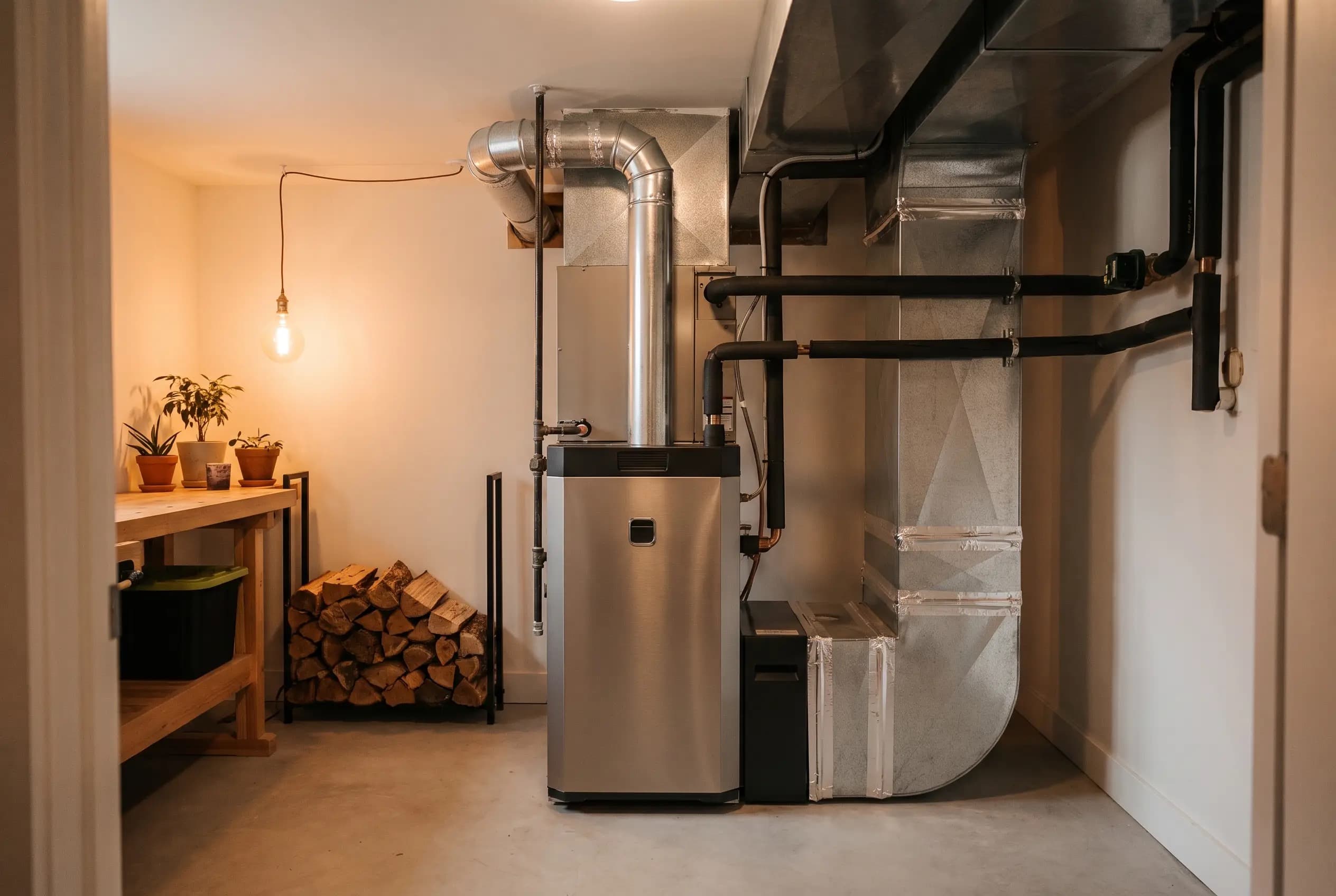
How Long Does a Furnace Last in Michigan?
Most furnaces in Michigan last somewhere in the 15 to 20 year range, and a well kept one can push past that. Our winters are hard on equipment, so a furnace here runs more hours than one down south, which means care matters more, not less. If yours is in that age window and starting to act up, it is worth taking an honest look before next heating season.
Now that the worst of the cold is behind us here in Lansing and the furnace is finally getting a rest, this is the smart time to ask the question. If your furnace groaned its way through another Michigan winter, you are probably wondering how much longer it has in it. Let us walk through it plainly, no scare tactics.
The honest lifespan number
A gas furnace in Michigan typically lasts about 15 to 20 years. Some tired ones tap out at 12. Some well maintained units are still humming along at 25. The spread is wide because lifespan is not really about the sticker on the side of the cabinet. It is about how hard the furnace worked and how well it was looked after.
Think of it like a truck. Two identical trucks roll off the same line. One gets its oil changed on time and drives easy country roads. The other tows heavy loads, skips maintenance, and idles all winter. One outlives the other by years. Your furnace is no different, and in Michigan, it is the truck that tows heavy.
What shortens a furnace in Michigan
Our climate is the first strike against long furnace life. A cold snap in January means your furnace runs long hours, day after day, and all those cycles add up. That part you cannot change. Plenty of the other factors, though, are within your control.
| What it is | Why it wears the furnace down |
|---|---|
| Long Michigan run hours | More heating cycles per winter means more wear on the burner, blower, and heat exchanger |
| A poor original install | Bad ductwork or a sloppy setup makes the furnace fight itself for its whole life |
| Skipped maintenance | Dirt and neglect force parts to run hot and hard, wearing them out early |
| An oversized furnace | Too big for the home, so it short-cycles and hammers itself with constant starts and stops |
| Bad airflow | Clogged filters or blocked returns trap heat inside and stress the heat exchanger |
Two of those deserve a closer word. An oversized furnace is a surprisingly common problem, and it leads straight to short-cycling, where the unit blasts on, satisfies the thermostat too fast, shuts off, and repeats all day. Every one of those starts is wear. And nothing extends a furnace like regular tune-ups, because a clean, adjusted furnace runs easier and catches small problems before they become big ones.
Signs your furnace is near the end
A furnace rarely dies all at once. It tells you it is winding down, if you know what to listen for. Watch for these:
- Repairs are stacking up, two or three service calls in a season instead of one every few years
- It short-cycles, kicking on and off constantly without really settling into a run
- Rust or corrosion showing up on the cabinet, the burners, or the flue
- Uneven heat, where one room roasts and another stays cold no matter what you do
- Your heating bills keep creeping up even though nothing else has changed
One or two of these on an older unit is not a death sentence. But when several show up together on a furnace pushing 18 or 20 years, the furnace is telling you something, and it is worth listening.
A real example: the Holt furnace
A homeowner over in Holt called us this past January. Her furnace was 19 years old, still running, but it had needed a new igniter in December and now the blower motor was going. She wanted to know if she should fix it again or let it go.
We did not tell her to panic and we did not push a new unit on her. We laid out the math. The furnace was near the end of its expected life, a blower motor is a real repair, and she had just paid for the igniter weeks earlier. Put another way, she was pouring good money into a unit that was on borrowed time. We told her the truth: this one was worth replacing, and here is why, plainly. She appreciated getting straight numbers instead of a sales pitch.
The repair versus replace math
Here is the simple way to think about it, and you can do it at your kitchen table without a calculator. A common rule of thumb multiplies the age of the furnace by the cost of the repair in front of you. When that product gets large relative to the price of a new furnace, replacement starts to make more sense than another patch.
In plain words: a small repair on a young furnace is an easy yes, fix it. A big repair on an old furnace is usually a no, because you are spending real money on equipment that will likely need the next repair soon anyway. The trouble spot is the middle, a mid-size repair on a 15 year old unit, and that is exactly where an honest opinion earns its keep. The right answer depends on the specific repair, the condition of the rest of the furnace, and how long you plan to stay in the home. Anyone giving you a one-size answer without looking is guessing.
Where homeowners get burned
The most common way people get hurt on this is waiting until January, when the furnace quits in a cold snap and they have to make a rushed decision in a cold house. A furnace on its last legs almost always fails at the worst possible time. Deciding in the spring, like right now, when there is no pressure, gets you a calmer and cheaper outcome.
The other trap is the opposite mistake: replacing a furnace that had plenty of life left because someone talked them into it. A 10 year old furnace with one repair does not need replacing. If a tech cannot clearly explain why replacement beats repair for your specific situation, be careful. That is the whole reason we quote a flat price up front, before any work starts, and our techs are not on commission, so nobody here has a reason to sell you a furnace you do not need.
Last one: skipping maintenance and then being surprised when the furnace dies early. The furnace that never got a tune-up is the one that quits at 13 instead of 20. Care is the cheapest way to add years.
If you are not sure whether your furnace has good years left or is living on borrowed time, that is exactly the kind of call we like to get. We will take an honest look, tell you plainly where it stands, and quote a flat price before the wrench comes out. Have a look at our Furnace Repair & Replacement work, or just reach out and we will talk it through with you, no pressure either way.
Common questions
Frequently asked
My furnace is 20 years old but still works fine. Do I need to replace it right now?
Not necessarily. If it is running well, heating evenly, and not racking up repairs, you can keep running it. Just know you are in the replacement window, so start planning now rather than getting caught by a January failure. A spring checkup will tell you a lot.
Does running my furnace hard all winter really wear it out faster?
Yes, in the sense that more run hours mean more wear, and Michigan winters mean plenty of run hours. That is why a furnace here often lands at the lower end of the lifespan range compared to a milder climate. Good maintenance is how you fight back against those hours.
How much does maintenance actually extend a furnace's life?
Quite a bit. A furnace that gets a yearly tune-up runs cleaner and cooler, and small issues get caught before they wreck expensive parts. It is common for a well maintained furnace to outlast a neglected one by several years.
Is it worth repairing a furnace that is 17 or 18 years old?
It depends on the repair. A small fix can be worth it to get through another season. A big repair on a furnace that old usually means you are better off putting that money toward a replacement, since more repairs are likely coming. We will give you the honest math for your exact situation.
What is the best time of year to replace a furnace in Michigan?
Spring and early fall, when you are not in the middle of a cold snap and not making a panicked decision in a cold house. You get more time to weigh options and a calmer process. That is a big part of why we bring this up in March.
How can I tell if my furnace is the wrong size for my house?
The clearest sign is short-cycling, where it turns on and off constantly instead of settling into a steady run, often with uneven heat between rooms. An oversized furnace wears itself out faster from all those starts. If yours does this, it is worth having someone check the sizing.
Keep reading